

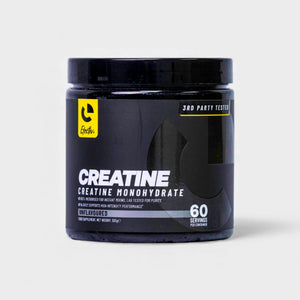

Creatine for Runners: Increase Sprint & Endurance Performance?
Creatine is one of the most researched supplements in sports nutrition, but is it just for bodybuilders? This guide breaks down what creatine is, how it works, and how runners can use it to support sprint work, hill sessions, and endurance training.
Creatine is one of the most researched supplements in sports nutrition, but is it just for bodybuilders? This article explores how creatine can help runners improve their sprint and endurance performance. We'll cover what creatine is, how it works, and the potential benefits of creatine supplementation for endurance athletes. For a broader look at how creatine fits into a CrossFit or hybrid training context, see our creatine for CrossFit athletes guide.

Understanding Creatine for Runners
What creatine actually does
Creatine helps your body regenerate ATP faster during short, intense efforts. That's most relevant for intervals, hills, track work, and strength sessions that support running economy. Browse our creatine range for runners to get started.
Quick note
If you're unsure due to medical history or kidney concerns, speak with a GP before supplementing.
What is Creatine?
Creatine is a naturally occurring compound found in small amounts in meat and fish, and produced by the body. Its role is to help supply energy to muscle cells, especially during high-intensity activity. Many people take creatine monohydrate to increase muscle creatine stores, which may support performance in repeated hard efforts.
How Does Creatine Work?
Creatine helps increase availability of ATP (adenosine triphosphate), your body's rapid energy currency. During intense work like sprinting or hill repeats, ATP is used quickly. Creatine supports faster ATP regeneration, helping you maintain quality output when the session demands repeat efforts.
Runner's translation
If your training includes intervals, hills, track sessions, or hard race finishes, creatine can support the "repeat power" you need to hit quality reps without fading. Pair it with adequate protein intake to maximise recovery between sessions.
Why Runners Consider Creatine
Runners don't use creatine to "get big". They use it to support quality in the sessions that build speed, resilience, and finishing power. It's especially useful if you're doing HYROX, CrossFit, gym strength, or hybrid training alongside running.

Benefits of Creatine Supplementation
Where creatine tends to shine for runners
Creatine is best known for power and repeated high-intensity output. For runners, that often means: faster sprints, stronger hill reps, better "kick" at the end of races, and improved quality across speed sessions.
Better repeat efforts
Helps you keep outputs higher across reps, especially in short recovery sessions. Combine with a structured approach to easy running — see our 80/20 running rule guide for pacing guidance.
Higher quality gym work
Supports strength training that improves running economy and durability. See our guide to protein for strength training to pair creatine with the right nutrition.
Stronger sprint finish
Useful for late-race surges, kick practice, and fast-finish sessions.
Enhanced Sprint Performance
Creatine is most noticeable in high-intensity, anaerobic efforts. That includes sprinting, hill repeats, and intervals where you need repeated bursts of power. If you're a runner who values speed sessions, it can be a high ROI supplement.
Improved Endurance Capacity
Creatine isn't an "endurance fuel" in the same way carbs are, but it can support the training inputs that build endurance: quality reps, strength work, and better recovery between hard efforts. For hybrid athletes, those knock-on effects matter. See our cross training workouts for runners guide for how to structure complementary sessions.
Glycogen Storage Benefits
Some evidence suggests creatine may support glycogen storage. For runners, this can be relevant during higher volume blocks or when you're combining running with strength and conditioning. Think of it as supporting the system that supports endurance.
Effects of Creatine on Endurance Athletes
Impact on Training Adaptations
Creatine may help you tolerate higher training loads by improving energy availability during intense work and supporting better recovery. Over time, that can mean more consistent training weeks and fewer sessions where you fall off the pace early. See the running pace calculator to help with your pace, and our hybrid training programme for a structured approach to building race-ready fitness.

Creatine Supplementation and Endurance Performance
Creatine's clearest benefits show up when endurance training includes repeated high-intensity work. If your week is purely long steady runs, it may feel subtle. If your week includes intervals, hills, strides, and gym work, it's more likely to feel noticeable. For guidance on how to structure your easy vs hard running, see our 80/20 running rule guide.
Real Scenarios: Creatine in Training
In practical training, creatine is most useful when you want to keep outputs high across repeat efforts. Examples include track intervals, hill sessions, HYROX-style run stations, or fast finish runs where you need your legs to respond late. If you're building toward a first hybrid race, see our hybrid training for beginners guide for a full training structure.
Good fits (where creatine usually makes sense)
5K–half marathon blocks, hill phases, track work, HYROX-style running sessions, and any plan built around repeat hard efforts with short recovery.
Practical Guidance on Creatine Usage
Consistency beats perfection
Most runners do best with 3–5g creatine monohydrate daily, taken consistently. Timing matters less than showing up every day.
How Much Creatine to Take?
A common approach includes two options: a faster "loading" route, or the slower steady route. Most runners choose the steady route for simplicity.
| Phase | Dosage | Best for |
|---|---|---|
| Loading (optional) | 20g/day split into 4 doses for 5–7 days | Quick saturation (higher GI risk) |
| Maintenance | 3–5g/day creatine monohydrate | Most runners (simple + consistent) |
When to Use Creatine?
Timing is flexible. Take it when you'll remember. Many runners take it with breakfast or post-training with a meal. Consistency is the main driver of benefits.
Best Practices for Supplementing with Creatine
- Choose creatine monohydrate (most researched, best value).
- Start at 3g daily if you're sensitive, then move to 5g.
- Take with food if you get stomach discomfort.
- Stay hydrated — use electrolytes especially in hotter climates or during longer sessions.
- Don't introduce it the week of a key race if you've never used it.

Potential Drawbacks for Runners
Stomach discomfort
More common during loading. Reduce dose, take with food, or skip loading.
Water weight
Some runners see 0.5–1.5kg early on from water stored in muscle.
Race-week changes
Avoid changing supplements close to an A-race if it's new to you.
Common Side Effects of Creatine
Some runners experience mild bloating or stomach cramps, particularly during a loading phase. These are usually short-lived and can be reduced by spreading doses, taking creatine with meals, or using a micronised form.
Water Retention Considerations
Creatine pulls water into muscle cells, which can increase body weight temporarily. This is not fat gain. For many runners, the performance upside outweighs this, especially during training blocks rather than race peaks. Staying on top of hydration and electrolytes helps manage this effectively.
Addressing Concerns: Is Creatine Good for Running?
For runners who train with intensity, creatine can be a smart addition. If your training is only easy mileage, it may feel less impactful. The best test is to use it consistently for 6–8 weeks and judge it by session quality and recovery, not just the scale.
Supplementing Smartly: When Does Creatine Make Sense?
Ask yourself this
If your week includes intervals, hills, strength work, HYROX sessions, or you care about a stronger finish, creatine makes sense. If not, it's optional.
Complementing Your Training Strategy
Creatine works best when it supports the sessions that matter: speed, strength, repeat efforts, and recoverability. It's not a replacement for nutrition, quality sleep and recovery, or carbs. It's a lever for training quality. Pair it with adequate protein for runners to get the most from your strength and conditioning work.
Integrating Efectiv Products into Your Routine
Keep it simple: choose a trusted creatine monohydrate, take 3–5g daily, and be consistent. If you're training in heat, pay extra attention to hydration and electrolytes.
Conclusion: Creatine as a Performance Partner
Creatine can be a valuable performance partner for runners when used correctly. The biggest upside is not "endurance magic" but better repeat outputs, stronger gym support, and improved session quality when training demands intensity. Read our cross training workouts for runners guide to see how to build the complementary sessions that make creatine most effective.
Quick FAQs
Will creatine make me heavier?+
Is a loading phase required?+
Does timing matter?+
Which type of creatine is best?+
Want to keep building smarter?
If your training includes intervals, HYROX-style running, or a focus on strong race-day finishes, creatine can be a useful tool. Pair it with the right protein strategy for runners and keep learning with our performance-led guides.


Leave a comment
This site is protected by hCaptcha and the hCaptcha Privacy Policy and Terms of Service apply.