

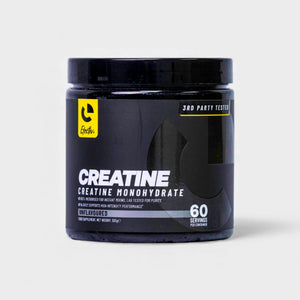

Creatine Monohydrate Pre vs Post Workout Supplementation
Should runners take creatine before or after training? Timing gets a lot of attention, but the bigger performance lever is consistency. This guide breaks down pre-workout vs post-workout creatine, how loading works, what to do on rest days and the simplest way to fit creatine into your running routine.
For runners in the UK, from parkrun regulars to marathon contenders, improving performance goes beyond simply logging more miles. Smart fuelling, effective recovery and consistent nutrition all influence how well your training translates into results.
Creatine is often associated with strength training, but it can also be relevant for runners who include hills, intervals, gym work or HYROX-style training. One of the biggest questions is when to take it: before training or after?
Should you take creatine before or after training?
The most important factor is taking creatine consistently every day. Post-workout supplementation may offer a modest advantage, particularly when taken alongside a protein- and carbohydrate-rich meal, but timing is secondary to consistent daily intake.
Simple runner routine
Take 3–5g creatine monohydrate daily. If you want an easy anchor point, add it to your post-training shake or meal.
Creatine works by increasing muscle creatine stores over time. Missing doses because you're trying to perfectly time supplementation is less useful than simply taking it every day.
Understanding Creatine Supplementation
Before worrying about timing, it helps to understand what creatine actually does. Creatine supplementation has been studied extensively and is primarily used to increase muscle creatine stores.
For runners, this is most relevant during high-intensity work such as sprint finishes, hill repetitions and strength training alongside mileage.
What is Creatine Monohydrate?
Creatine monohydrate is one of the most researched forms of creatine available as a dietary supplement.
It works by increasing phosphocreatine stores inside muscle cells. Phosphocreatine helps regenerate adenosine triphosphate, or ATP, which provides rapidly available energy during demanding activity.
Repeated intensity
Supports rapid energy regeneration during short, hard efforts and interval sessions.
Power output
Particularly relevant when running sessions require repeated bursts of force and power.
Gym support
Useful for runners combining endurance work with resistance training or HYROX sessions.
Benefits of Creatine for Body Composition
Creatine supplementation can support increases in fat-free mass and lean body mass, particularly when combined with effective resistance training.
For endurance athletes, maintaining muscle mass can be useful during demanding training blocks, particularly when strength training is being used to improve robustness and power.
How Creatine Affects Strength and Performance
By increasing the availability of rapidly accessible energy, creatine can support greater power output during repeated high-intensity efforts.
Runner's translation
Think hill sprints, track work, a finishing kick, heavy squats and HYROX stations, rather than expecting creatine to directly transform an easy long run.
Pre vs Post Workout Creatine Supplementation
Timing creatine around training is often debated. In practice, both approaches can work because the long-term goal is to maintain elevated muscle creatine stores.
Pre-Workout Creatine
Pre-workout supplementation is often used with the idea of having creatine available before high-intensity work begins. This may fit conveniently before strength, interval or hybrid sessions.
Post-Workout Creatine
Post-workout supplementation focuses on recovery and replenishing muscle creatine stores following training. It also fits naturally alongside a recovery meal or shake.
Practical favouriteThe Effects of Pre-Workout Creatine
The idea behind taking creatine pre-workout is to support muscle energy availability before the session begins.
This can be particularly appealing for hybrid athletes combining running with resistance work or high-intensity intervals.
However, because creatine works through saturation of muscle creatine stores over time, taking a serving immediately before a workout isn't the same as taking a stimulant-style pre-workout that produces an immediate effect.
The Benefits of Post-Workout Creatine
Taking creatine after training provides a convenient way to pair supplementation with recovery nutrition.
After a challenging run or strength workout, runners may already be consuming carbohydrates and protein. Adding creatine to that same meal or shake can make the routine easy to maintain.
Why post-workout is convenient
You already have a recovery habit in place. Add creatine to it, remove another decision from your day, and improve the chance that you take it consistently.
What Does Research Say About Creatine Timing?
Research comparing pre- and post-workout creatine has created interest in whether one timing strategy is superior.
The overall message in the source material is that total daily creatine intake remains the priority, with some evidence suggesting that post-workout supplementation may offer a modest advantage for creatine retention, strength and fat-free mass.
If post-workout supplementation fits your routine, it is a sensible option. If another time of day makes you more consistent, that is also valuable.
Best Practices for Taking Creatine
The best creatine routine is usually simple enough that you don't need to think about it every day.
Choose monohydrate
Creatine monohydrate is the established, well-researched form used throughout the source guide.
Take it daily
The goal is to maintain elevated muscle creatine stores rather than only supplementing on hard training days.
Anchor it to a habit
Breakfast, your post-training shake or an evening meal can all work if they help you stay consistent.
Creatine Loading and Maintenance
One common approach to creatine supplementation uses an initial loading phase followed by a lower maintenance intake.
Daily intake: approximately 20g, split across smaller servings.
Duration: 5–7 days.
Purpose: increase muscle creatine stores more rapidly.
Daily intake: 3–5g.
Duration: ongoing.
Purpose: maintain elevated muscle creatine stores.
Loading is a strategy, not the whole point
The source guide presents loading as one way to increase muscle creatine stores quickly. Long-term consistency with the maintenance phase remains the key part of the routine.
Optimal Timing: The Best Time to Take Creatine
For most runners, the best time is ultimately the time that makes daily intake easiest.
Post-workout supplementation can be a practical option, particularly alongside a carbohydrate- and protein-containing meal or shake.
If you train early in the morning, you could simply take your creatine after your run with breakfast rather than worrying about supplementation before heading out of the door.
Should You Take Creatine on Rest Days?
The goal is to maintain elevated muscle creatine stores, so rest days remain part of the daily supplementation routine.
You do not need to stop creatine simply because you aren't training that day. Consistency across both training and recovery days helps maintain muscle creatine saturation.
3–5g daily
Take it at your usual time, with post-training nutrition if that fits your routine.
Still 3–5g
Keep the same daily habit even when you're not running or lifting.
No cycling needed here
The goal in the source article is maintaining creatine stores consistently over time.
Creatine Timing for Different Runner Schedules
Before-work miles
Run first, then add creatine to breakfast or your post-run shake. There's no need to wake up earlier just to time creatine.
After-work session
Add creatine to your evening recovery meal or shake after the session.
Run + strength
Use one consistent daily dose rather than feeling you need separate creatine servings for every workout.
Creatine Timing: Quick FAQs
Is creatine better before or after a workout? +
Does creatine work immediately before training? +
Should runners take creatine every day? +
Should I take creatine on rest days? +
How much creatine should I take? +
Do I need to take creatine with protein? +
Is creatine useful for runners? +
Conclusion: Pre or Post Workout Creatine?
The pre- versus post-workout debate can make creatine supplementation sound more complicated than it needs to be.
The core principle is simple: creatine works through maintaining elevated muscle creatine stores, so consistent daily supplementation matters more than precise workout timing.
If you want a simple routine, taking creatine after training with your recovery meal or shake is a practical strategy. If another time of day helps you remember it more reliably, consistency should take priority.
Post-workout is a sensible option, but the best creatine routine is ultimately the one you can repeat consistently across training days and rest days.
Stop chasing perfect timing.
Make creatine part of your daily routine, stay consistent and let your training do the hard work. Supplements should simplify performance, not complicate it.


Leave a comment
This site is protected by hCaptcha and the hCaptcha Privacy Policy and Terms of Service apply.