

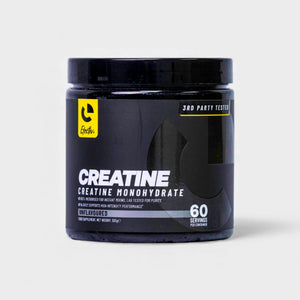

Is a Creatine Loading Phase Worth It for Endurance Athletes?
Creatine is one of the most researched sports supplements, but endurance athletes often wonder whether they need to load it. This guide explains how creatine loading works, whether it is necessary, and how runners and hybrid athletes can use creatine monohydrate intelligently.
As endurance athletes, we’re constantly seeking ways to optimise training, enhance performance, and speed up recovery. Amid the many sports nutrition strategies available, creatine supplementation often sparks debate, particularly when it comes to the relevance of a creatine loading phase for long-distance runners.
The important distinction is that loading is a strategy for reaching full muscle creatine saturation faster, not a requirement for getting the benefits of creatine. For runners and hybrid athletes, the choice often comes down to how quickly you want to reach saturation, how well you tolerate larger doses, and where you are in your training cycle.
Do endurance athletes need to load creatine?
A loading phase can saturate muscle creatine stores faster, but it is optional. Taking 3–5g of creatine monohydrate every day will also increase muscle creatine stores over time. For many runners, the simpler daily approach is perfectly practical.

Understanding Creatine and Its Benefits
Creatine is not just a supplement for bodybuilders. Its role in the phosphocreatine energy system makes it particularly relevant to athletes who combine endurance with short, intense efforts. For a broader overview, see our guide on why athletes should use creatine.
What is Creatine?
Creatine is a naturally occurring organic compound found primarily in skeletal muscle. It plays a pivotal role in the production of adenosine triphosphate (ATP), the body’s primary energy currency.
Our bodies produce creatine naturally and we also obtain it from foods such as meat and fish. Supplementing with creatine monohydrate can increase the amount of creatine stored in skeletal muscle. Once muscle creatine stores are elevated, more phosphocreatine is available to help rapidly regenerate ATP during high-intensity efforts.
ATP regeneration
Creatine increases phosphocreatine availability, supporting rapid ATP regeneration during short, intense efforts.
Repeat efforts
This can be particularly useful for intervals, hills, sprint finishes and hybrid sessions combining running with strength work.
Muscle support
Creatine can also support training recovery and help athletes preserve muscle during demanding training blocks.
How Creatine Supports Endurance
While creatine is often linked to strength and power, it can also support endurance athletes by bolstering energy systems that become important during high-intensity bursts within longer runs.
Increased muscle creatine stores mean faster regeneration of ATP, allowing for sustained effort and improved performance during short, sharp efforts. This is particularly relevant for hybrid athletes who incorporate resistance training alongside running.
Runner’s translation
Think less about creatine making you faster over an entire 10K by itself and more about the quality of the efforts inside your training: hills, intervals, accelerations, race surges and the final push towards the finish. For more on running nutrition, see our protein for runners guide.
Benefits of Creatine for Endurance Athletes
The benefits of creatine for endurance athletes extend beyond energy production. Supplementing with creatine can support recovery, muscle preservation and the ability to handle demanding training.
This can be particularly useful during periods of increasing weekly mileage or intense race preparation for events such as a 10K, half marathon or marathon. Creatine is also relevant to hybrid athletes whose training includes both endurance work and resistance training. See our full endurance supplement stack guide for a complete picture.

The Creatine Loading Phase Explained
Loading is simply a faster route to muscle creatine saturation. It does not create a different form of creatine benefit; it changes how quickly you reach elevated muscle creatine stores.
What is a Creatine Loading Phase?
A creatine loading phase involves taking a higher amount of creatine for a short initial period, typically to rapidly saturate muscle creatine stores.
The idea is straightforward: take a larger daily dose for several days, increase muscle creatine stores quickly, then reduce the daily amount to a maintenance dose.
1. Load
Take approximately 20g of creatine monohydrate per day for around 5–7 days, commonly divided into four 5g servings.
2. Reach saturation
The higher intake accelerates the process of increasing muscle creatine stores compared with a lower daily dose.
3. Maintain
Once stores are elevated, move to approximately 3–5g of creatine monohydrate per day.
How to Properly Load Creatine
To load creatine, endurance athletes generally use a higher daily intake of creatine monohydrate for around 5 to 7 days. Splitting the daily amount into several smaller servings can make the protocol easier to tolerate.
After the initial loading period, the daily dose can be reduced to a maintenance amount. There is no need to continue taking 20g every day once muscle creatine stores have been saturated.
Typical Dosage of Creatine During Loading
Typical intake: 20g/day, split into 4 × 5g doses
Time to saturation: Approximately 5–7 days
Best suited to: Athletes wanting faster saturation
Typical intake: 3–5g/day
Time to saturation: Approximately 3–4 weeks
Best suited to: Athletes who prefer simplicity
Loading phase
Take approximately 20g per day for 5–7 days, split across the day, then move to 3–5g daily. Shop our creatine monohydrate.
No loading phase
Take 3–5g of creatine monohydrate every day. Saturation happens more gradually, but the long-term approach can achieve similar elevated stores.
Important distinction
Loading changes how quickly you reach saturation. It does not mean that the eventual maintenance phase needs to be higher.

Effects of Creatine on Endurance Performance
Enhancing Energy Stores with Creatine
Creatine supplementation primarily enhances the availability of phosphocreatine within muscle cells. This compound contributes to the rapid regeneration of ATP, which is particularly important during short, high-intensity efforts.
For endurance athletes, that can translate into greater capacity for bursts of speed, tackling hills, completing intervals or producing a strong finish after prolonged aerobic work. For runners specifically, see our guide on protein for runners and what to eat before a run for complementary nutrition strategies.
Creatine is particularly relevant when endurance includes intensity.
Think track intervals, hill repetitions, fartlek sessions, race surges, sprint finishes, strength training and hybrid workouts where running is combined with repeated high-intensity movements. HYROX athletes and CrossFit athletes are prime examples.
Impact on Recovery and Muscle Preservation
Beyond energy production, creatine can support recovery and muscle preservation. This can be valuable during periods of high weekly mileage, marathon preparation or training blocks where strength work is performed alongside substantial running volume.
Maintaining adequate nutrition and protein intake remains fundamental, but creatine can sit alongside those strategies as part of a broader approach to training recovery. See our endurance supplement stack guide for a full recovery framework.
Real Scenarios: Creatine for Race Days
For race-day scenarios, creatine is not a direct fuel source for continuous aerobic running. Instead, its relevance comes from having saturated muscle creatine stores available when high-intensity efforts occur.
Climbing hard
Supporting repeated high-intensity efforts when gradients force a change in pace and power.
Late surges
Helping support the short bursts required when changing pace or pushing towards the finish.
Strength + running
Particularly relevant when endurance training sits alongside resistance or functional fitness work. See our hybrid athlete guide.
Potential Side Effects of Creatine Supplementation
Common Side Effects to Be Aware Of
Creatine supplementation is widely considered safe for most healthy individuals when used appropriately. However, endurance athletes should understand the potential effects of taking creatine, particularly during a loading phase.
The most frequently noticed change is an increase in body weight associated with greater water stored within muscle. Some athletes may also experience mild gastrointestinal discomfort, including stomach upset or diarrhoea, particularly when taking larger doses.
What about runners worried about weight?
A small increase in body mass can occur when muscle creatine stores increase. For a runner, especially one focused on long-distance racing, it is worth considering how this fits into your individual goals rather than assuming any weight change is automatically negative.
Mitigating Risks While Supplementing
There are several simple ways to make creatine supplementation more practical and comfortable.
- Split a loading dose across several servings rather than taking it all at once.
- Maintain sensible fluid intake, particularly around long or sweaty training sessions. Our electrolyte supplements can help with hydration around training.
- Use creatine monohydrate from a reputable source.
- If a loading phase causes gastrointestinal discomfort, consider switching to a lower daily dose instead.
- Prioritise consistency over precise supplement timing.
When Creatine May Not Be Appropriate
Creatine is not appropriate for everyone. Individuals with pre-existing kidney conditions should speak with a healthcare professional before starting supplementation. Pregnant or breastfeeding women and people under 18 should also seek appropriate professional advice because evidence in these populations is more limited.
If you have an existing medical condition, take medication, or are unsure whether creatine is suitable for you, speak with a qualified healthcare professional before supplementing.

Informed Use of Creatine Supplements
Supplementation Strategies for Endurance Runners
For endurance runners, smart creatine supplementation is about the long-term picture rather than chasing an immediate performance effect.
A loading phase can rapidly saturate muscle creatine stores, but it is not essential. A consistent daily dose of 3–5g of creatine monohydrate will gradually increase muscle creatine stores and can reach a similar level of saturation over approximately three to four weeks.
If you don’t want to load
Take 3–5g of creatine monohydrate every day. You do not need to cycle it or time it precisely around your run. Make it part of a routine you can maintain consistently.
When Might Loading Make Sense?
Loading may be useful when an athlete wants to reach elevated muscle creatine stores relatively quickly. For example, someone beginning a new training block may prefer to reach saturation within roughly a week rather than waiting several weeks.
However, there is no need to load simply because creatine is being introduced. If your race is months away, a straightforward 3–5g daily approach may be easier and more comfortable.
You want faster saturation
A loading phase can make sense if you want to increase muscle creatine stores quickly before a training block or race.
You have plenty of time
If your training block is already several weeks long, there is usually little practical reason to rush saturation.
You don’t tolerate loading
If larger doses cause stomach discomfort, switch to a consistent lower daily dose of creatine monohydrate.
Integrating Creatine with Other EFECTIV Products
Creatine works best as part of a broader sports nutrition strategy rather than as a replacement for proper fuelling. For runners, that means combining adequate carbohydrate intake, sufficient protein, hydration and overall energy availability with appropriate supplementation.
Pairing a daily creatine routine with a protein supplement after training can be a convenient way to support recovery and muscle repair, particularly during demanding training blocks or periods of increasing weekly mileage. Explore our full hybrid athlete supplement range for a complete stack.
Think bigger than the supplement
Creatine cannot compensate for inadequate carbohydrate intake, insufficient recovery or poor training structure. Use it to complement a well-designed endurance nutrition and training strategy. See our endurance supplement stack guide for the full picture.
Conclusion: Is Loading Right for You?
Ultimately, whether a creatine loading phase is right for you as an endurance athlete depends on your individual goals, training schedule and tolerance.
Taking approximately 20g per day for 5–7 days can increase muscle creatine stores more rapidly. However, it is not essential. A consistent daily intake of 3–5g of creatine monohydrate will also increase muscle creatine stores, simply over a longer period.
Loading is optional. Consistency is not.
If you want rapid saturation and tolerate larger doses well, loading can be a useful strategy. If you prefer simplicity, have plenty of time before your key race, or experience gastrointestinal discomfort with higher doses, 3–5g daily is a straightforward alternative. Either way, shop our creatine monohydrate to get started.
For serious UK runners and hybrid athletes, the bigger opportunity is to use creatine consistently alongside good training, carbohydrate fuelling, protein intake, hydration and recovery. The loading phase is simply one way of getting started.
Creatine Loading FAQs
Do endurance athletes need to load creatine? +
How much creatine should I take during a loading phase? +
What should I take after the loading phase? +
Can runners take creatine without loading? +
Will creatine make runners gain weight? +
Can creatine cause stomach problems? +
Does creatine timing matter for runners? +
Is creatine useful for hybrid athletes? +
Build a smarter endurance strategy.
Creatine is only one part of the performance equation. Explore more EFECTIV guides covering running nutrition, recovery, protein and supplementation for hybrid athletes.


Leave a comment
This site is protected by hCaptcha and the hCaptcha Privacy Policy and Terms of Service apply.