


Whey protein is one of the most popular supplements for muscle growth, recovery and everyday nutrition. But what does the science actually say? Here are ten potential benefits, what the research supports and how to make whey protein part of your routine.
What Are the Benefits of Whey Protein?
Whey protein is a high-quality source of complete protein that contributes to the growth and maintenance of muscle mass. It contains all nine essential amino acids, including leucine, which plays an important role in stimulating muscle protein synthesis.
Research also suggests that whey protein can support resistance training adaptations, help people meet their daily protein requirements and contribute to weight-management strategies when used as part of a suitable diet.
Some studies have investigated additional effects on appetite, blood lipids and blood pressure, although the evidence for these outcomes is less consistent.
What Is Whey Protein?
Whey is one of the main proteins found in milk. During cheese production, liquid whey separates from the curds. This whey can then be filtered, processed and dried into protein powder.
Whey protein is popular because it provides a concentrated source of protein with a strong essential amino acid profile.
Types of Whey Protein
| Type | Characteristics | Typical use |
|---|---|---|
| Whey Concentrate | Contains whey protein alongside some lactose, carbohydrate and fat | Everyday protein supplementation |
| Whey Isolate | Further processed to increase protein concentration and reduce lactose and fat | Higher protein density or lower lactose intake |
| Whey Hydrolysate | Protein partially broken down into smaller peptides | Specialised nutrition applications |
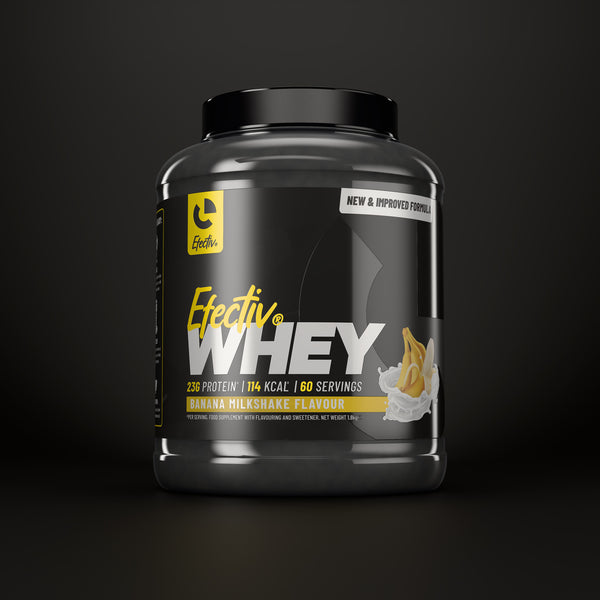
EFECTIV Whey Protein uses 100% whey protein concentrate as its protein source, providing 22–23g protein per scoop depending on flavour.
10 Evidence-Based Benefits of Whey Protein
1. Supports Muscle Growth
Strong evidence for protein with resistance trainingOne of whey protein's best-established benefits is its ability to contribute to muscle growth.
Resistance training stimulates muscle adaptation, while dietary protein provides amino acids needed to build and repair muscle tissue.
Whey protein is rich in essential amino acids, particularly leucine, which helps stimulate muscle protein synthesis.
A 2026 network meta-analysis covering 78 studies and 4,755 participants found that whey protein supplementation alongside resistance training improved fat-free mass and strength compared with placebo.
Practical takeaway: Whey protein can help you meet your protein requirements when building muscle, especially if your normal diet falls short.
2. Helps Maintain Muscle Mass
Well-established role of dietary proteinMaintaining muscle mass matters for physical function, exercise performance and healthy ageing.
Protein contributes to the maintenance of muscle mass. Whey provides a convenient way to increase protein intake without preparing an additional meal.
This can be useful during periods of reduced appetite, busy schedules or calorie-controlled diets where adequate protein remains important.
Practical takeaway: Use whey to help maintain sufficient protein intake alongside regular activity and resistance exercise.
3. Supports Strength Gains
Supported by resistance training researchStrength improvements depend primarily on training, but adequate protein supports the adaptations that occur afterwards.
Research suggests that whey protein supplementation can improve strength outcomes when combined with resistance training, particularly when it helps increase otherwise insufficient protein intake.
For example, the 2026 network meta-analysis reported a statistically significant improvement in muscular strength with whey supplementation compared with placebo.
Practical takeaway: Combine progressive strength training with sufficient daily protein rather than relying on a shake alone.
4. Supports Muscle Repair and Recovery
Established nutritional role; variable recovery outcomesExercise places stress on muscle tissue. Dietary protein supplies amino acids used during muscle repair and adaptation.
Whey protein is a practical post-workout option because it provides essential amino acids in a convenient serving.
However, the research does not show that whey always reduces soreness or immediately improves performance after every session.
Practical takeaway: A whey shake after training can help you reach your daily protein target, particularly when your next meal is several hours away.
5. Provides All Nine Essential Amino Acids
Established nutritional compositionEssential amino acids cannot be produced in sufficient amounts by the body and must be obtained through food.
Whey is a complete protein containing all nine essential amino acids:
- Leucine
- Isoleucine
- Valine
- Lysine
- Methionine
- Phenylalanine
- Threonine
- Tryptophan
- Histidine
Leucine, isoleucine and valine are known as branched-chain amino acids, or BCAAs.
Practical takeaway: Whey provides a complete amino acid profile, so separate BCAA supplementation is generally unnecessary when total protein intake is adequate.
6. May Help You Feel Fuller
Moderate evidence; effects varyProtein-rich foods and drinks can influence appetite and feelings of fullness.
Some short-term studies suggest that whey protein may increase satiety or reduce subsequent food intake, although results depend on the amount consumed and what it is compared with.
A whey shake can therefore be a useful high-protein snack, but it will not necessarily reduce appetite for everyone.
Practical takeaway: Consider whey as part of a balanced meal or snack when you need a convenient protein source.
7. May Support Weight Management
Promising evidence in specific populationsWhey protein is sometimes used during fat-loss programmes because it provides protein in a relatively convenient, measured serving.
A systematic review of nine randomised controlled trials involving adults with overweight or obesity reported improvements in body weight and fat mass in groups receiving whey protein compared with controls.
However, results depend on the overall diet, energy balance, exercise and the comparison treatment.
Whey protein does not directly cause fat loss without an appropriate dietary strategy.
Practical takeaway: Use whey to help meet protein targets during weight management, while prioritising total calorie intake and resistance training.
8. May Support Muscle Function During Healthy Ageing
Moderate, population-specific evidenceMaintaining strength and muscle function becomes increasingly important with age.
A 2025 systematic review and meta-analysis involving 1,454 older adults found that whey supplementation modestly improved lower-body muscular strength.
The same review found that whey combined with resistance training improved lean body mass in subgroup analysis, although whey alone did not consistently improve overall body composition.
Practical takeaway: Older adults may benefit from adequate protein and appropriate strength training, but whey supplementation is not a substitute for physical activity or individual nutritional advice.
9. May Improve Certain Cholesterol Markers
Emerging evidence; not a treatment claimResearchers have investigated whether whey protein supplementation influences cholesterol and other markers of cardiometabolic health.
A 2025 meta-analysis of 21 randomised controlled trials found reductions in LDL cholesterol in certain subgroups and reductions in total cholesterol when whey supplementation was combined with exercise.
These results were not universal, and the review did not find a significant overall effect on HDL cholesterol.
Practical takeaway: Some findings are encouraging, but whey protein should not be used as a treatment for high cholesterol.
10. May Have a Small Effect on Blood Pressure
Limited and mixed evidenceSome clinical studies have examined whether whey protein affects blood pressure.
A 2023 meta-analysis of 18 studies involving 1,177 participants reported a small average reduction in systolic blood pressure of approximately 1.5mmHg.
However, the studies varied considerably, and a later 2025 review found no clinically relevant overall effect on blood pressure.
Practical takeaway: This remains an area of research. Whey protein is not a replacement for prescribed treatment or established blood-pressure management strategies.
The strongest reasons to use whey protein are its high-quality amino acid profile and its contribution to muscle growth and maintenance. Strength, recovery and weight-management benefits depend on training and dietary context. Other health effects remain less certain.
How Much Whey Protein Should You Take Per Day?
Your total daily protein intake matters more than the number of protein shakes you consume.
For many healthy adults undertaking regular exercise, approximately 1.4–2.0g protein per kilogram of body weight per day is a commonly recommended range.
Individual requirements can differ with age, training volume, energy intake and health status.
| Body weight | 1.4g/kg daily | 2.0g/kg daily |
|---|---|---|
| 55kg | 77g | 110g |
| 65kg | 91g | 130g |
| 75kg | 105g | 150g |
| 85kg | 119g | 170g |
| 95kg | 133g | 190g |
For example, someone weighing 75kg who targets 120g protein daily could use one EFECTIV Whey Protein serving to contribute approximately 22–23g towards that target.
The remaining protein can come from foods such as eggs, dairy, fish, meat, tofu, beans and other protein-rich ingredients.
Can You Have Too Much Whey Protein?
Consuming more protein than your body requires does not guarantee additional muscle growth.
Very high intakes may also displace other useful nutrients. People with kidney disease or medically prescribed protein restrictions should seek professional advice before increasing protein intake.
When Is the Best Time to Take Whey Protein?
Whey protein can be consumed in the morning, after exercise or between meals.
Although post-workout protein is convenient, the overall amount of protein consumed throughout the day is generally more important than hitting a very narrow post-exercise window.
| Timing | Why you might use it |
|---|---|
| Morning | Add protein to breakfast or a smoothie |
| After training | Convenient way to consume protein after exercise |
| Between meals | Help reach daily protein requirements |
| Evening | Top up protein intake if needed |
Choose the timing that works with your training, appetite and normal meals.
EFECTIV® Whey Protein Powder | 60 Servings
EFECTIV Whey Protein is made using 100% whey protein concentrate sourced from grass-fed dairy cattle, providing a complete protein source for everyday nutrition, muscle growth and maintenance.
Why Choose EFECTIV Whey Protein?
- 100% whey protein concentrate: A high-quality, complete protein source.
- 22–23g protein per scoop: Depending on the flavour selected.
- 60 servings: A 1.8kg tub for regular use.
- Grass-fed dairy source: Made using whey concentrate from grass-fed cows.
- Made in the UK: Manufactured for EFECTIV Nutrition.
- Multiple flavours: Options for shakes, smoothies and recipes.
- Vegetarian friendly: Contains milk-derived protein.
How to Use EFECTIV Whey Protein
Add one 30g scoop to approximately 200ml of chilled water or milk. Shake for 20–30 seconds until mixed.
You can also blend it into porridge, yoghurt or a smoothie.
Allergen information: Contains milk. Manufactured in a facility that also handles egg, gluten and nuts.
Nutrition note: The amount of protein and other nutrients varies by flavour. Always check the nutritional label for your selected variant.
Shop EFECTIV Whey ProteinWho Can Benefit From Whey Protein?
Gym-Goers and Strength Athletes
Whey protein can help meet the protein requirements associated with resistance training and muscle growth.
HYROX and Hybrid Athletes
Protein supports muscle repair and adaptation alongside running, strength training and functional exercise.
Active Women
Whey protein can help women meet daily protein requirements during strength, endurance and general fitness training.
Read Our Active Women's GuideAdults Focused on Healthy Ageing
Adequate protein, combined with resistance exercise, can support the maintenance of muscle mass and physical function.
Does Whey Protein Have Any Side Effects?
Whey protein is generally well tolerated by healthy adults when used in appropriate amounts.
However, some people experience bloating, wind or digestive discomfort, particularly if they are sensitive to lactose.
Whey concentrate contains some lactose, while whey isolate generally contains less.
Whey protein is derived from milk and is unsuitable for people with a milk protein allergy. Anyone with relevant medical conditions or prescribed dietary restrictions should seek professional guidance.
If you prefer a dairy-free option, explore EFECTIV's protein powder range, which also includes vegan protein.
Whey Protein FAQs
What are the main health benefits of whey protein?
Whey protein provides essential amino acids and contributes to muscle growth and maintenance. It can also support strength training adaptations and help people meet their daily protein requirements.
Is whey protein good for muscle growth?
Yes. Whey protein supplies amino acids required for muscle protein synthesis. When combined with resistance training and sufficient overall nutrition, it can support muscle growth.
Can whey protein help with weight loss?
Whey protein can help maintain adequate protein intake during a calorie-controlled diet. Some studies have reported favourable body-composition outcomes, but fat loss still depends on overall energy balance.
Is whey protein suitable for women?
Yes. Whey protein can be used by women and men to help meet protein requirements. Needs depend on body weight, activity and individual circumstances.
Can you drink whey protein every day?
Healthy adults can generally consume whey protein daily as part of a balanced diet, provided total protein intake is appropriate for their needs.
Is whey protein good for beginners?
Yes. Beginners can use whey protein to help meet daily protein targets. It is a convenient food supplement rather than a requirement for starting exercise.
Is whey protein better than plant protein?
Whey provides a complete essential amino acid profile and is naturally rich in leucine. Well-formulated plant protein products can also support muscle growth when sufficient protein and essential amino acids are consumed.
Does whey protein contain lactose?
Whey concentrate usually contains some lactose. Whey isolate generally contains less. People with lactose intolerance should check the label and consider their individual tolerance.
How many scoops of whey protein should I take?
The number of scoops depends on how much protein you already consume from food. One EFECTIV 30g scoop provides approximately 22–23g protein, depending on flavour.
When should I take whey protein for the best results?
After exercise is convenient, but whey can be taken at any time. Consistent daily protein intake is generally more important than precise timing.
Is Whey Protein Worth Taking?
Whey protein is a well-researched source of high-quality dietary protein. Its strongest benefits relate to muscle growth, muscle maintenance and supporting the adaptations that occur with resistance training.
It can also be useful for people who struggle to reach their protein requirements through food alone.
Some research suggests additional benefits for appetite, body composition and selected cardiometabolic markers, but those findings are less consistent and should not be treated as guaranteed outcomes.
For most active adults, the best approach is straightforward: prioritise a balanced diet, train consistently and use whey protein when it helps you meet your nutritional needs.
Make Daily Protein Simple
Support your daily protein intake with EFECTIV Whey Protein. Made using 100% whey protein concentrate, with 22–23g protein per serving and 60 servings per tub.
Explore EFECTIV Whey ProteinResearch and Scientific Sources
- Network Meta-Analysis: Protein Supplements, Strength and Fat-Free Mass (2026)
- Whey Protein Supplementation in Older Adults: Systematic Review and Meta-Analysis (2025)
- Whey Protein and Cardiometabolic Health: Systematic Review (2025)
- Whey Protein, Body Composition and Cardiovascular Risk Factors (2017)
- Whey Protein and Blood Pressure: Systematic Review (2023)
- EFECTIV Whey Protein: Ingredients, Nutrition and Product Information
Every dose on the label.
The products this guide mentions.