

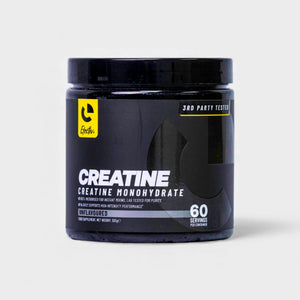
Does Creatine Cause Weight Gain? Understanding Water Retention and Muscle Gain
Creatine can increase the number you see on the scales — but that doesn't mean you're gaining body fat. This guide explains what actually happens when you start taking creatine, why water weight can rise, how muscle gain differs from fat gain, and what runners should consider before changing their supplementation.
Navigating running supplements can be confusing, especially when you're paying close attention to body composition and running performance. One of the most common questions around creatine is simple: will it make you gain weight?
For many people, the answer is yes — the scale can move upwards. But understanding what that weight actually is matters far more than the number itself. Water stored inside muscle, increased lean muscle and increased body fat are three very different things.
Does creatine make you gain weight?
It can increase body weight, particularly when you first start taking it. The immediate change is largely caused by water being stored inside muscle cells, rather than an increase in body fat.
The important distinction
Scale weight ≠ body fat.
Creatine-related weight changes can come from intracellular water and, over time, increased lean muscle when paired with appropriate training.
When the scale rises soon after beginning supplementation, water retention inside the muscles is usually the main reason.
What is Creatine?
Creatine is one of the most widely researched supplements used to support performance, particularly during activities requiring short bursts of power.
For runners, that can translate to stronger finishing efforts, better hill performance and more productive strength or HYROX sessions alongside endurance training.
Definition and Role in the Body
Creatine is a naturally occurring compound involved in energy production inside muscle cells. It helps regenerate adenosine triphosphate — ATP — which provides rapidly available energy during demanding exercise.
Increasing muscle creatine stores through supplementation can therefore support muscle strength and power.
Types of Creatine Available
Although different forms of creatine exist, creatine monohydrate has the strongest research base and remains the simplest choice for most athletes.
How Creatine Works for Muscle Gain
Creatine supplementation increases phosphocreatine stores in muscle, helping ATP regenerate more rapidly.
During resistance training, that may allow you to maintain power or complete more productive training work. Over time, when combined with strength training, this can support muscle development and preservation.
Does Creatine Cause Weight Gain?
This is one of the most common concerns among runners because body weight can influence how running feels. Creatine does often increase scale weight, but the type of weight gain matters.
Early weight gain
The most immediate increase after starting creatine is typically water stored inside muscle cells.
Longer-term gain
When creatine supports productive resistance training, increased lean muscle mass can contribute to body weight over time.
Different mechanism
Creatine itself does not directly cause body-fat accumulation. Fat gain is different from creatine-related water retention.
Understanding Weight Gain on Creatine
When creatine supplementation begins — particularly if a loading phase is used — body weight can increase relatively quickly.
This initial change largely reflects increased intracellular water rather than fat gain or an immediate increase in new muscle tissue.
Runner's translation
If your weight increases shortly after starting creatine, don't automatically interpret it as a negative change in body composition. Look at the context, how quickly it happened and how your training is progressing.
Water Weight vs. Muscle Mass
Creatine causes muscle cells to retain more water. That can increase overall scale weight even though body fat hasn't changed.
Longer-term muscle gain is different. When creatine is combined with resistance training, the improved training stimulus can support gains in lean muscle mass.
How Creatine Can Influence Body Composition
Creatine can therefore influence body composition in two main ways: an early increase in muscle water and, over time, support for lean muscle development when combined with effective training.
For runners, additional lean mass can support power and strength, especially when strength training is being used to complement running performance.
Water Retention: The Science Behind It
What is Water Retention?
Water retention refers to additional fluid being held within the body. In the context of creatine supplementation, the most relevant change is water being drawn into muscle cells.
This is important because runners sometimes see a higher number on the scales and immediately assume they have gained fat.
How Creatine Affects Water Retention
When your muscle creatine stores rise, additional water is stored within the muscle cells. This intracellular water contributes to the initial increase in body weight seen by many creatine users.
That is different from accumulating body fat and forms part of the physiological response to increased muscle creatine stores.
Identifying Water Weight vs. Fat Gain
| Factor | Creatine water weight | Body fat gain |
|---|---|---|
| Speed | Can occur relatively quickly after beginning creatine. | Develops over time through sustained energy surplus. |
| Where it is stored | Primarily within muscle cells. | Stored as adipose tissue. |
| Cause | Higher muscle creatine stores draw additional water into muscle. | Energy intake consistently exceeding energy expenditure. |
| What the scale shows | Weight can rise. | Weight can also rise. |
Don't let one metric decide everything
Scale weight alone doesn't tell you whether you've gained water, muscle or fat. Training performance, measurements, how clothing fits and longer-term trends provide more context.
Using Creatine Effectively
If you're using creatine for running, strength or hybrid training, the simplest strategy is usually consistency rather than complicated protocols.
Best Practices for Taking Creatine
Use monohydrate
Creatine monohydrate is the most established and researched option.
Take it consistently
Daily supplementation helps maintain elevated muscle creatine stores.
Mix and move on
Add it to water or a shake and make it part of a repeatable routine.
Creatine Loading Phase Explained
A creatine loading phase uses a higher intake for approximately 5–7 days in order to increase muscle creatine stores more rapidly.
Because creatine stores increase quickly, a loading phase can also produce a more noticeable early increase in water weight.
Loading
Useful if your aim is to saturate creatine stores more quickly, but the associated water-weight change may also happen faster.
No loading
A consistent lower daily intake can increase creatine stores more gradually and may suit runners who want to avoid a rapid change on the scales.
Maintaining Results While Trying to Lose Weight
If your goal includes reducing body fat, creatine can still fit into your plan. The key is understanding that an increase in scale weight from water is separate from the underlying fat-loss process.
Creatine may also help support strength and preservation of lean muscle during periods when calorie intake is reduced.
If the scale matters to you
Consider avoiding an aggressive loading phase and use a consistent lower daily intake instead. This may make the early change in body weight less abrupt.
Benefits of Creatine Beyond Weight Gain
Focusing only on the number on the scale can obscure why athletes take creatine in the first place. Its potential value lies in supporting training performance, strength and muscle preservation.
High-intensity efforts
Supports rapid ATP regeneration during hard efforts such as sprints and hills.
Support hard training
Can support recovery and help runners maintain productive training alongside strength work.
Preserve lean mass
Particularly useful for athletes combining endurance training with resistance exercise.
Enhancing Performance and Endurance
Creatine is most closely associated with repeated high-intensity work because increased phosphocreatine stores support rapid ATP regeneration.
For runners, that can be relevant during sprint finishes, hill repetitions, intervals and strength sessions rather than steady-state endurance itself.
Supporting Muscle Recovery and Growth
Runners combining mileage with strength or HYROX-style training place significant demands on their muscles. Creatine can support the training process by helping sustain higher-quality work and supporting lean muscle development.
Potential Role During Fat Loss
Creatine can also be useful when athletes are trying to reduce body fat while maintaining performance. Supporting strength and lean muscle preservation can be valuable during a calorie deficit.
Again, this means the number on the scales needs context. Water weight from creatine and changes in body fat are not the same thing.
Addressing Common Myths and Misconceptions
“Creatine makes you fat”
Creatine-related early weight gain is largely associated with increased water stored within muscle, rather than direct fat accumulation.
“Any scale gain is bad”
Scale weight cannot distinguish between water, lean muscle and body fat.
“Creatine is only for lifters”
It can also be relevant for runners who use sprinting, hills, resistance work or HYROX-style training.
Does Creatine Make You Gain Fat?
Creatine itself does not directly cause fat gain. The early increase in body weight associated with creatine supplementation primarily comes from additional water stored inside the muscles.
That should not be confused with accumulating body fat.
Are All Weight Gains from Creatine the Same?
No. Early increases are commonly water-related, while longer-term changes can also reflect increased lean muscle if your training supports muscle development.
They can all influence scale weight, but they are not interchangeable and they don't mean the same thing for performance or body composition.
Who Should Consider Using Creatine?
Creatine may be relevant for runners training for distances from 5K through marathon who also perform strength work, intervals or hybrid training.
It becomes especially useful when your goals include improving power, supporting strength, preserving lean muscle or improving repeated high-intensity performance.
Creatine Weight Gain: Quick FAQs
Does creatine cause weight gain? +
Does creatine cause fat gain? +
Why does creatine increase water weight? +
Will creatine weight settle down? +
Should runners avoid creatine because of weight gain? +
Do I need a loading phase? +
Can I use creatine while trying to lose fat? +
The Runner's Verdict: Should Weight Gain Stop You Taking Creatine?
Not all weight gain should be treated equally. When creatine causes an early increase on the scales, that increase is predominantly associated with water stored within muscle.
Over time, creatine may also support lean muscle development when combined with resistance training. Neither of these effects is the same as gaining body fat.
For runners, the useful question isn't simply “will creatine make me heavier?” It's whether the potential benefits to strength, power, muscle preservation and high-intensity training support your performance goals.
Understand what has changed, assess it alongside your training, and judge creatine by the performance outcomes that actually matter to you.
Don't let the scale tell the whole story.
Creatine can increase body weight while still supporting strength, power and lean muscle. Focus on body composition, training quality and performance rather than a single number.


Leave a comment
This site is protected by hCaptcha and the hCaptcha Privacy Policy and Terms of Service apply.