

Creatine for Women: Should You Take Creatine? Benefits & Facts
Creatine isn’t just for bodybuilders. For women who run, lift, race HYROX or combine endurance with strength training, creatine can support power, muscle strength and recovery. Here’s what it actually does, which type to choose and how to use it without overcomplicating your nutrition.
Navigating sports nutrition can be complicated, particularly when so much conflicting information exists around supplements for women. If you’re serious about running performance, whether that means a faster 5K, preparing for a half marathon, building strength or improving your HYROX performance, understanding the supplements that genuinely support training matters.
Creatine is one of the most established options. Rather than being exclusively a bodybuilding supplement, it can support the high-intensity work, strength development and recovery that sit alongside endurance training.
Is creatine good for women?
Creatine can be particularly useful for women who combine running with strength training, intervals or hybrid fitness. It increases muscle creatine stores and supports rapid energy production during demanding efforts.
Keep it simple
Choose creatine monohydrate and take around 3–5g every day. You don't need complicated cycling or precise workout timing.
Understanding Creatine Supplementation
Creatine supplementation is often associated with strength athletes, but its potential benefits extend beyond the gym. This is particularly relevant for runners and women engaged in hybrid training.
For women looking to improve performance and recovery, understanding what creatine actually does is more useful than treating it as another quick-fix supplement.
What is Creatine?
Creatine is a naturally occurring compound found in muscle cells. It plays an important role in energy production, particularly during high-intensity, short-duration activity.
Your body produces creatine naturally, and you also obtain some from foods such as red meat and fish. Supplementation can increase the amount of creatine stored in the muscles.
Hard intervals
Supports rapid energy production during sprint intervals, track sessions and demanding hill repetitions.
Gym performance
Can support strength and power when resistance training forms part of your running programme.
HYROX training
Particularly relevant when running is combined with repeated high-intensity functional work.
Forms of Creatine Available
There are several different forms of creatine on the market, including creatine hydrochloride and creatine ethyl ester.
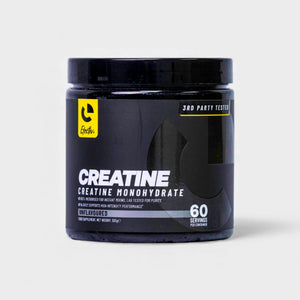
Creatine monohydrate is the most researched and widely used form of creatine. For most women, there is little reason to make supplementation more complicated than this.
How Creatine Works in the Body
Creatine increases the availability of phosphocreatine in your muscles. Phosphocreatine helps regenerate adenosine triphosphate, ATP, which acts as one of the body's main sources of rapidly available energy.
This is particularly useful during intense efforts when energy needs rise rapidly.
Runner’s translation
Think sprint finishes, steep hill repeats, heavy strength sets and demanding HYROX stations. Creatine supports the short bursts of power that complement your endurance base.
Benefits of Creatine for Women
While creatine has traditionally been associated with male strength athletes, women who combine running, resistance training and high-intensity work can also benefit from supplementation.
Support muscle & strength
Particularly useful when creatine is combined with resistance training.
Improve hard efforts
Useful for sprints, hills and repeated high-intensity work.
Support training consistency
May support recovery following demanding training sessions.
Improved Muscle Mass and Strength
For women who integrate strength work into their running programme, creatine supplementation can support improvements in muscle strength and mass when combined with resistance training.
That doesn't mean becoming unnecessarily bulky. Stronger muscles can support running economy, sprint power and resilience during higher-volume training.
Potential Benefits for Endurance Activities
Creatine won't replace carbohydrates as the primary fuel for endurance running. Its benefits are more indirect.
Improved strength and power can contribute to better hill training, stronger finishing kicks and higher-quality hybrid training sessions. Over time, those training improvements can support endurance performance.
Creatine and Recovery
Recovery matters just as much as the training session itself. Creatine may help support recovery following demanding exercise, potentially helping women maintain a more consistent training volume.
Where this matters most
Heavy mileage weeks, back-to-back training days, HYROX preparation, strength blocks and periods where your programme combines endurance with repeated high-intensity work.
Addressing Concerns About Creatine
Creatine has been studied extensively, yet several concerns continue to circulate, particularly around weight gain, hair loss and whether women should use it at all.
Does Creatine Cause Hair Loss?
Concerns about creatine and hair loss largely stem from research looking at changes in DHT. However, the evidence has not established a direct causal link between creatine supplementation and hair loss.
Creatine = hair loss?
There is currently no strong evidence showing that taking creatine directly causes hair loss in women.
Side Effects of Creatine Supplementation
Creatine monohydrate is widely researched, but some people can experience mild side effects. These are more likely when taking large doses or using a loading phase.
Increased muscle water
Creatine can increase water stored within muscle.
What you can do: use a consistent 3–5g daily dose rather than aggressively loading.
Stomach discomfort
Large single doses may be harder to tolerate.
What you can do: reduce the serving size and take it with food or plenty of fluid.
Temporary changes
Some users notice temporary changes when beginning supplementation.
What you can do: allow your body time to adjust and avoid unnecessarily high doses.
Who Should Consider Taking Creatine?
Creatine can be useful across a wide range of training styles, but it becomes particularly relevant when your programme contains strength or high-intensity work alongside running.
Creatine may make sense if...
You run and strength train, compete in HYROX, regularly perform intervals or hills, want to improve power, or need additional support maintaining muscle during heavy training.
Get individual advice if...
You are pregnant, have an underlying health condition, have pre-existing kidney concerns, or have been advised to manage supplementation by a healthcare professional.
How to Incorporate Creatine into Your Routine
Creatine doesn't need to be complicated. For most women, the best routine is simply the one that makes daily consistency easy.
Recommended Dosage for Women
A consistent daily intake of creatine monohydrate can gradually increase muscle creatine stores without requiring a loading phase.
Do Women Need a Creatine Loading Phase?
A loading phase isn't essential. Taking a consistent daily dose allows creatine stores to build gradually while keeping the routine simple.
3g daily
A simple lower daily dose that gradually increases muscle creatine stores.
5g daily
One of the most straightforward everyday approaches for active women.
Take it consistently
Daily consistency matters more than trying to perfectly time each serving.
When to Take Creatine for Optimal Results
The exact time you take creatine is less important than taking it consistently.
You could add it to your morning shake, take it alongside breakfast, or include it with a post-training meal. Pick a time that makes it easy to remember.
Don't overthink timing
Creatine works by gradually increasing muscle creatine stores. It isn't a pre-workout stimulant that needs to be taken 30 minutes before training.
Combining Creatine with Other Supplements
Creatine can fit easily alongside other sports nutrition products. Women combining running with strength or hybrid training may choose to use it alongside protein powder or carbohydrates as part of a post-training routine.
Power & strength
Supports muscle creatine stores and repeated high-intensity performance.
Repair
Supports muscle repair and recovery following demanding training.
Running fuel
Remain a key fuel source for endurance running and harder training sessions.
Creatine for Women: Quick FAQs
Is creatine suitable for female runners? +
Will creatine make me bulky? +
Will creatine make me gain weight? +
Does creatine cause hair loss? +
What is the best creatine for women? +
How much creatine should women take? +
Does creatine need to be taken before a workout? +
Conclusion: Should Women Take Creatine?
Whether creatine makes sense ultimately depends on your training. If your programme combines running with strength work, sprint intervals or hybrid fitness, creatine can offer a simple way to support the high-intensity side of your performance.
Evaluate Your Personal Goals
Consider what you're actually trying to improve. A stronger sprint finish? More power during HYROX? Better strength alongside marathon training? Improved recovery between demanding sessions?
If strength, power, muscle preservation and recovery are priorities, creatine may fit naturally into your training strategy.
Consulting with Health Professionals
Creatine is widely studied, but individual circumstances matter. Women who are pregnant, have underlying health conditions or have kidney-related concerns should seek personalised advice from a healthcare professional before beginning supplementation.
Creatine monohydrate is the most established form. For women who run, lift or train across multiple disciplines, a consistent 3–5g daily approach keeps supplementation straightforward.
Train hard. Supplement smarter.
Creatine doesn't replace good training, recovery or nutrition. It supports them. Keep your routine simple, choose evidence-led supplements and focus on consistency.


Leave a comment
This site is protected by hCaptcha and the hCaptcha Privacy Policy and Terms of Service apply.